
big game
roe deer
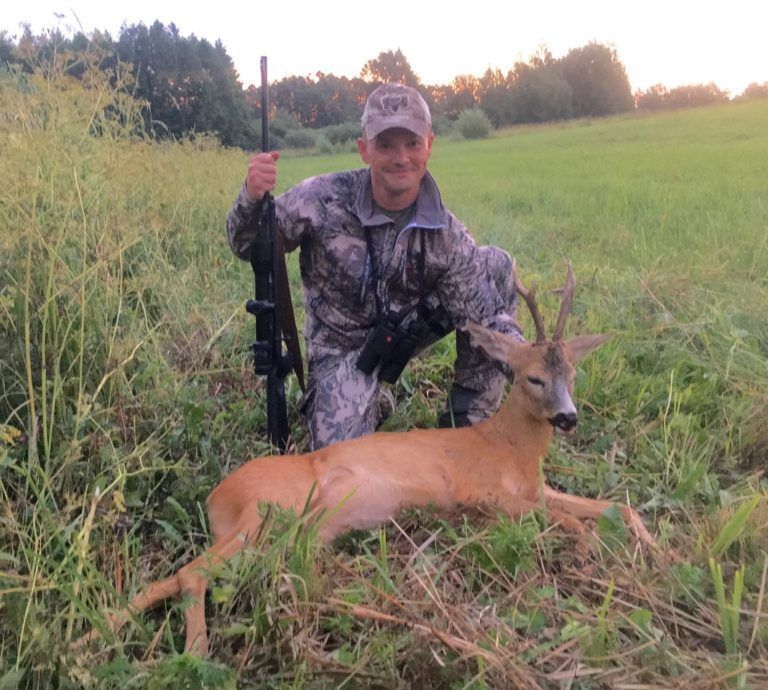
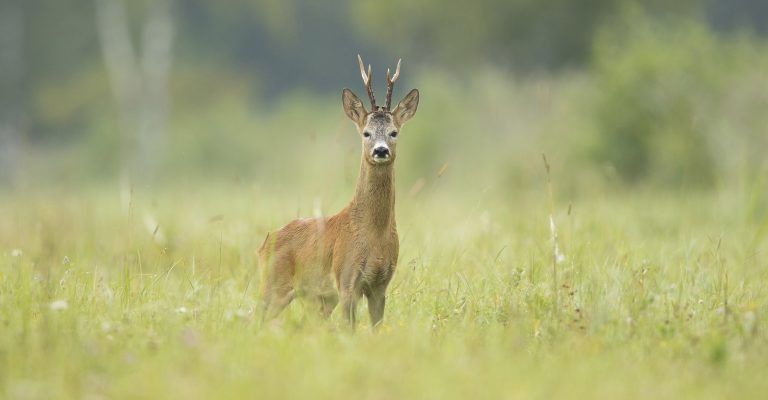
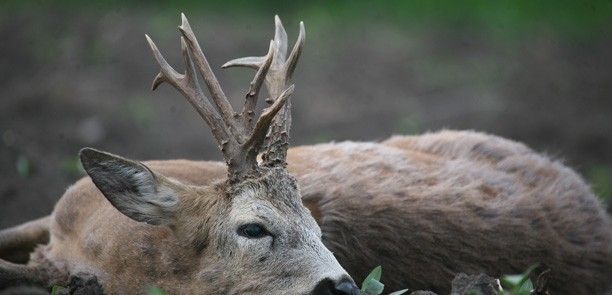
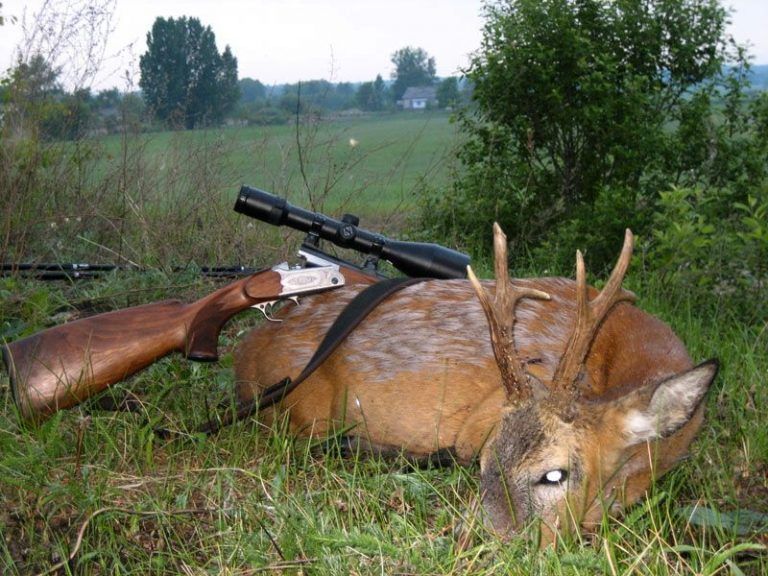
Spain offers great conditions and several places for hunting roe deers: Burgos, Soria, Guadalajara are the most famous. European Roe Deer, Capreolus capreolus, the smallest and most elegant native deer in Europe. Coloration is rich reddish-brown in summer, with a gray face, white chin and black muzzle band. Rump patch is obscure. Winter coat is grayish-brown, with two white throat patches and a prominent white rump patch of erectile hairs that can expand under stress to form a large white disk. Tail is small and white, invisible against the rump.
Usually solitary, but tends to form small groups in winter. During the rut in July and August, a buck will be with a single doe (unlike other deer species, which escort several) and will fight intruding males fiercely. The roe deer is the only deer species with delayed implantation, the fetal development not starting until December or January.
Fawns (usually two, range is 1-3) are born in the spring. Normal lifespan in the wild is 10-12 years, with maximum about 17 years. Roe deer are delicate in captivity, surviving only an average of 3-1/2 years. Active mainly at night, spending the day in cover. Senses are well developed. Excellent swimmer. Shy but curious. Doglike bark when alarmed. The female makes a whistling noise during mating season and to call her fawns.
mouflon
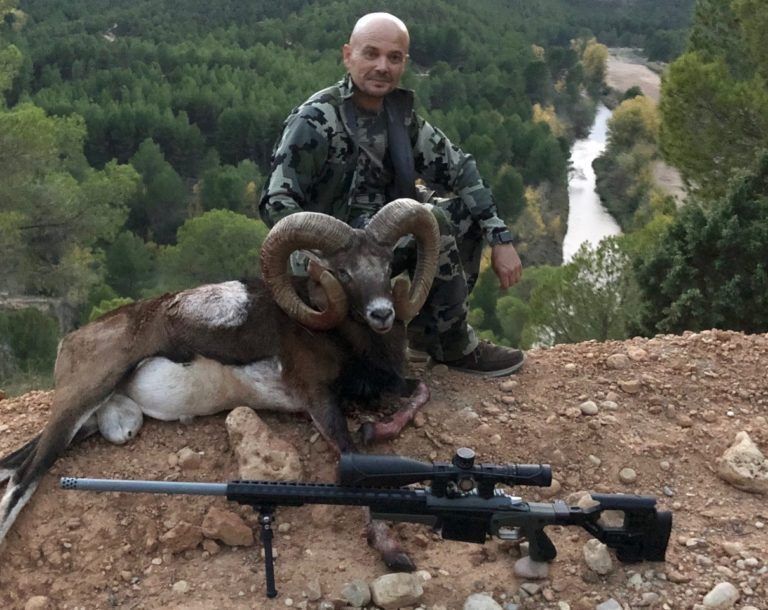
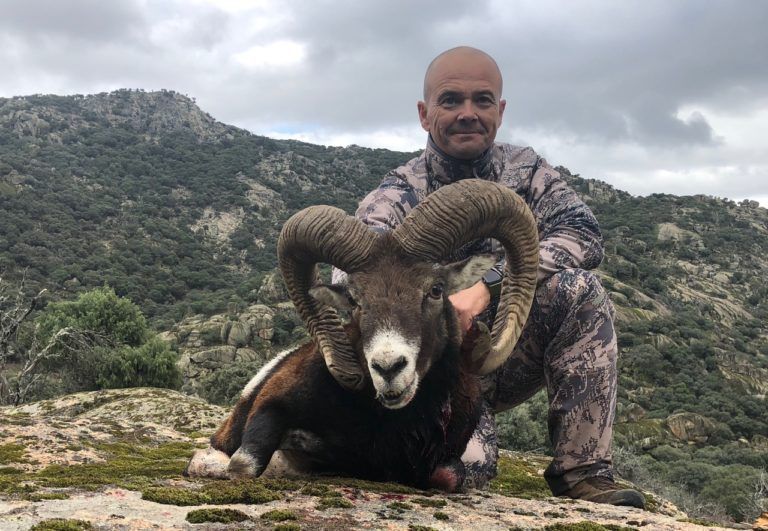
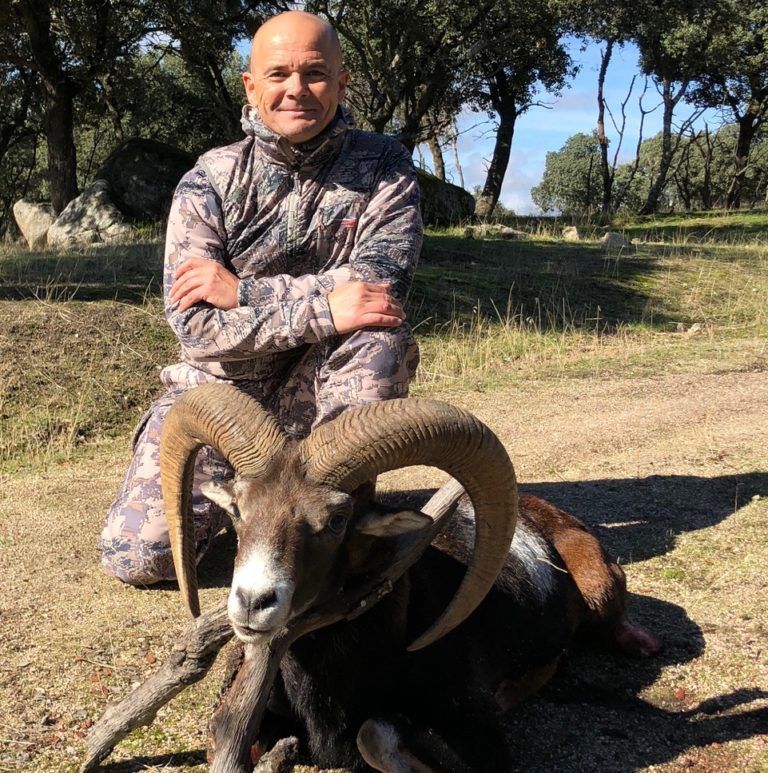
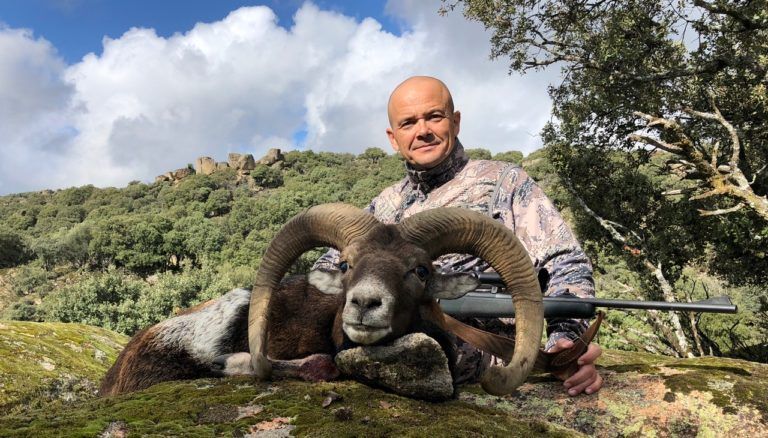
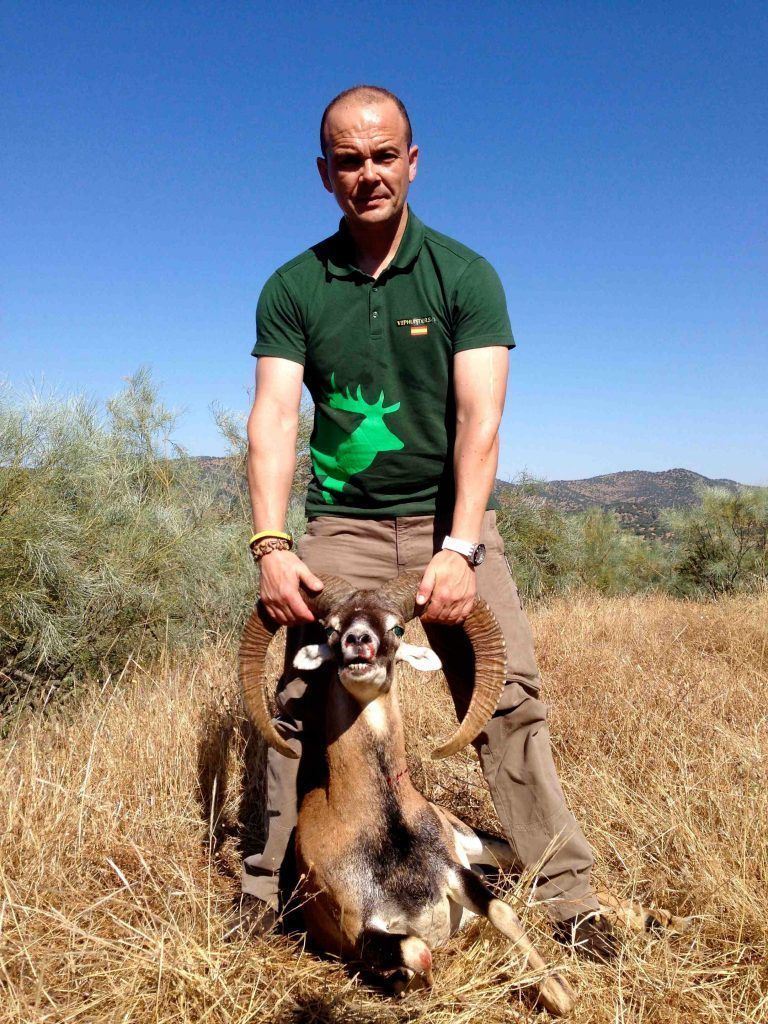
Master Hunters have a great hunting estates for mouflons around Spain. You can to stalk a great mouflon. Great quality of trophies and guarantees of hunting.
red deer
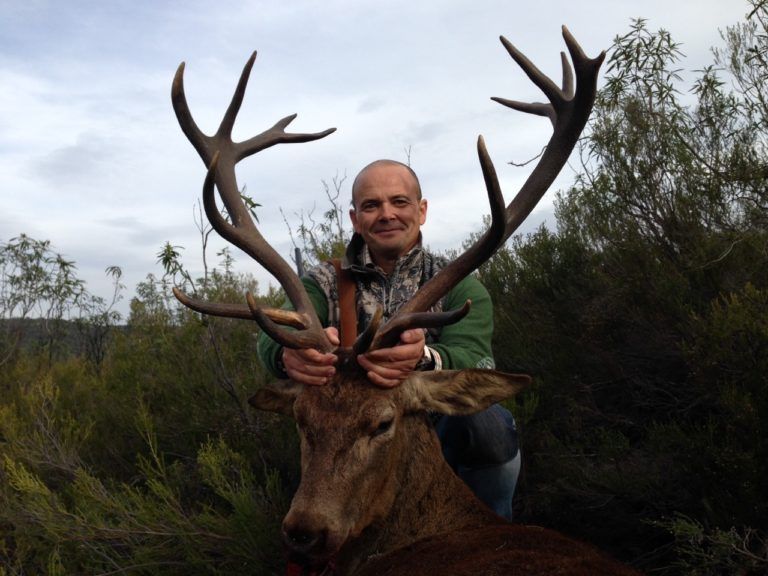
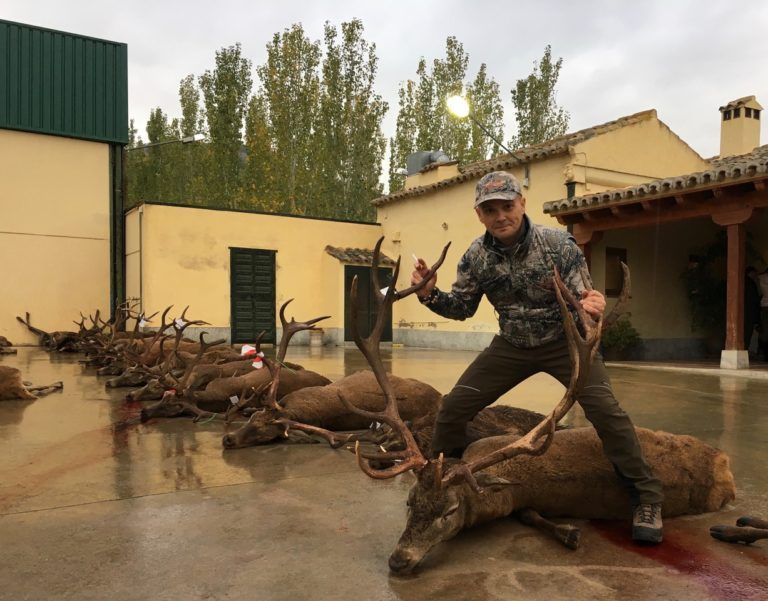
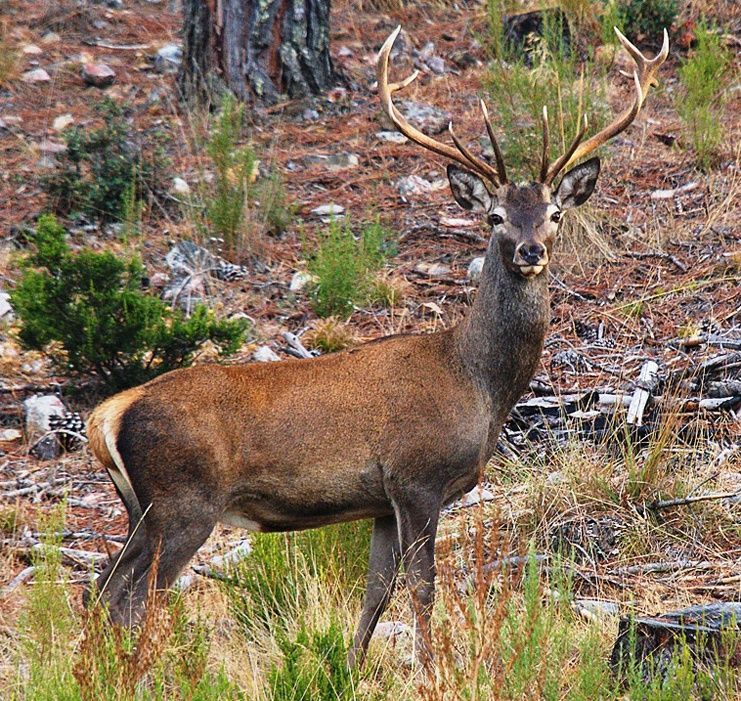
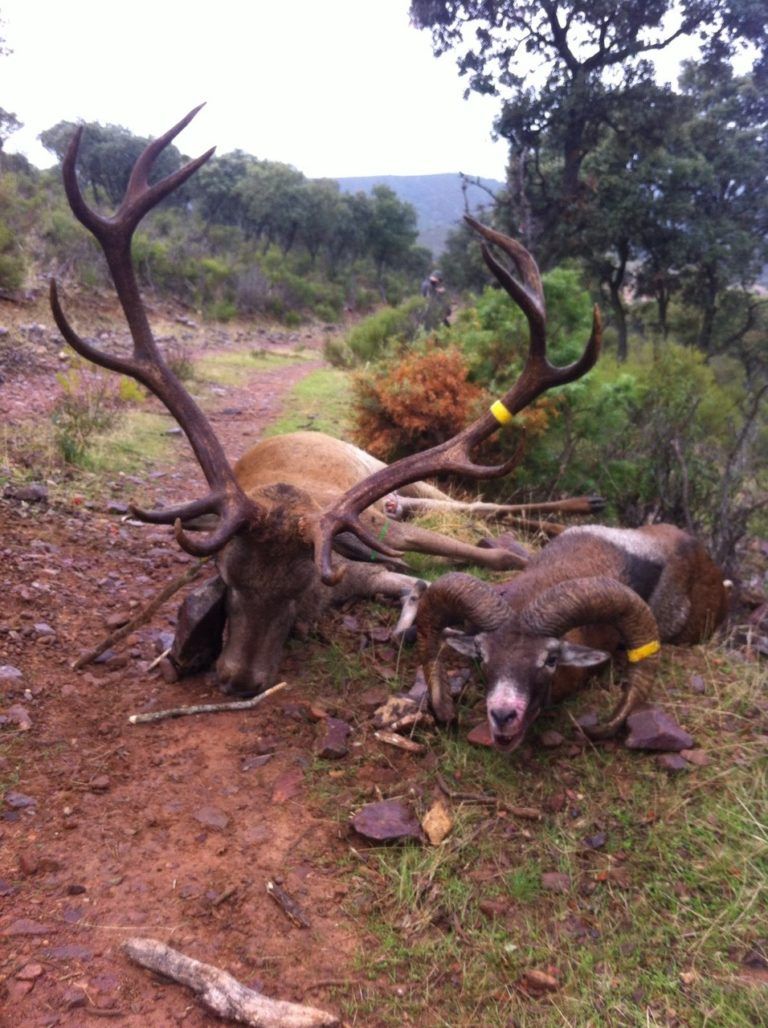
Iberian stag hunting takes place mid September through early February. The rutting season is an exciting time to hunt this big game specie.
In Spain we cand find two kinds of Red Deer: European Red Deer and Iberian Red Deer.
The European Red, Cervus elaphus hippelaphus, is the largest of all red deer, with the finest specimens as regards weight and quality. Stags normally weigh 600-660 pounds (272-300 kg).
The Iberian Red Deer, Cervus elaphus hispanicus, is a smaller race, with stags weighing 180-220 pounds (82-100 kg). Compared to the European red deer, the coat is not as thick and is somewhat lighter in color.
fallow deer
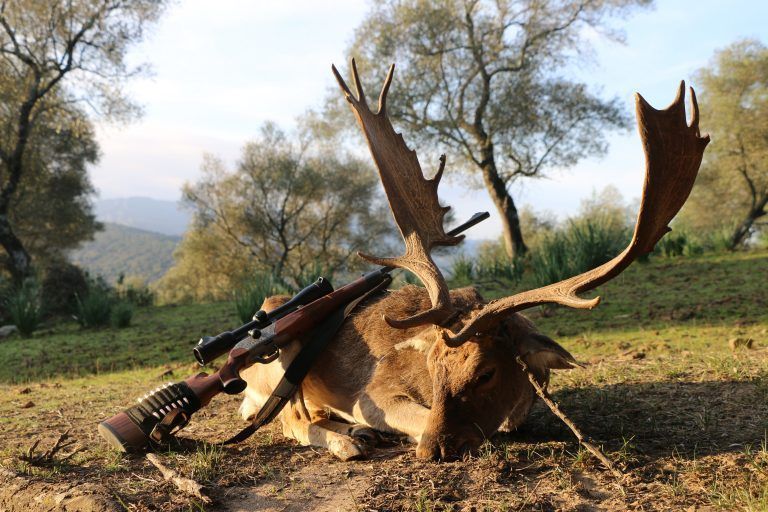
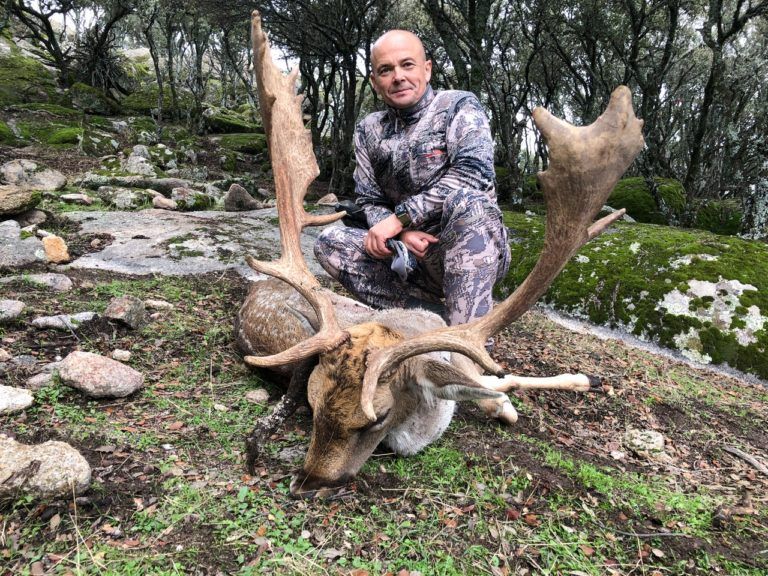
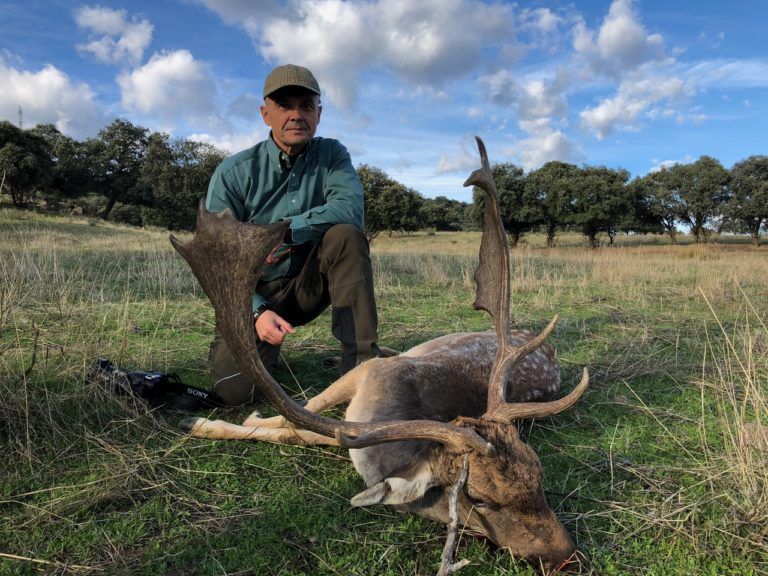
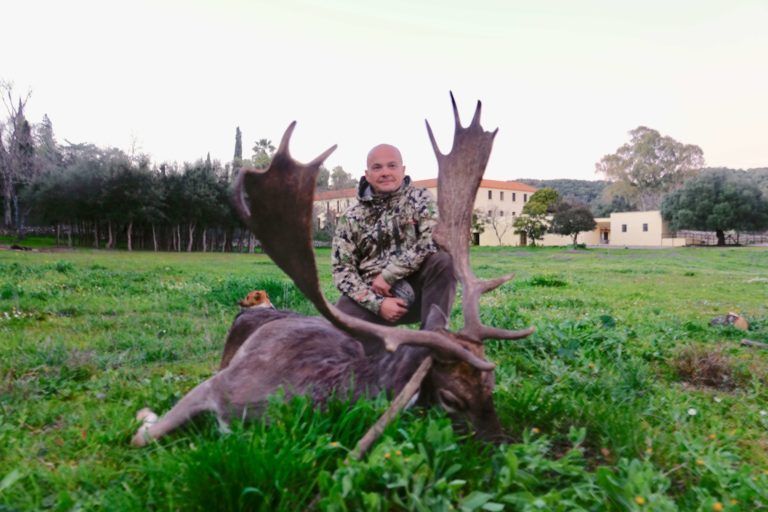
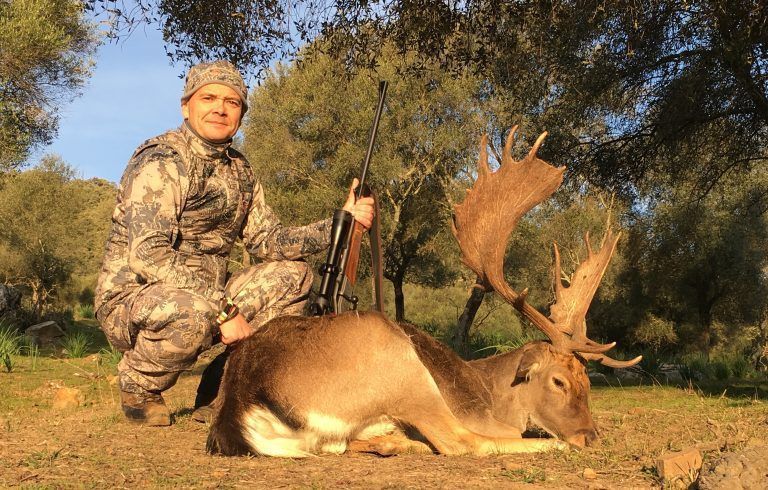
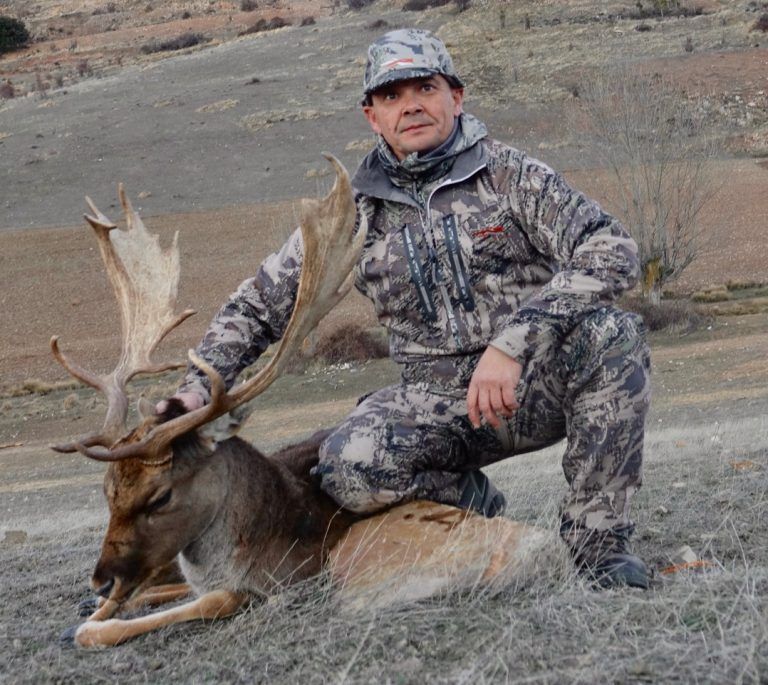
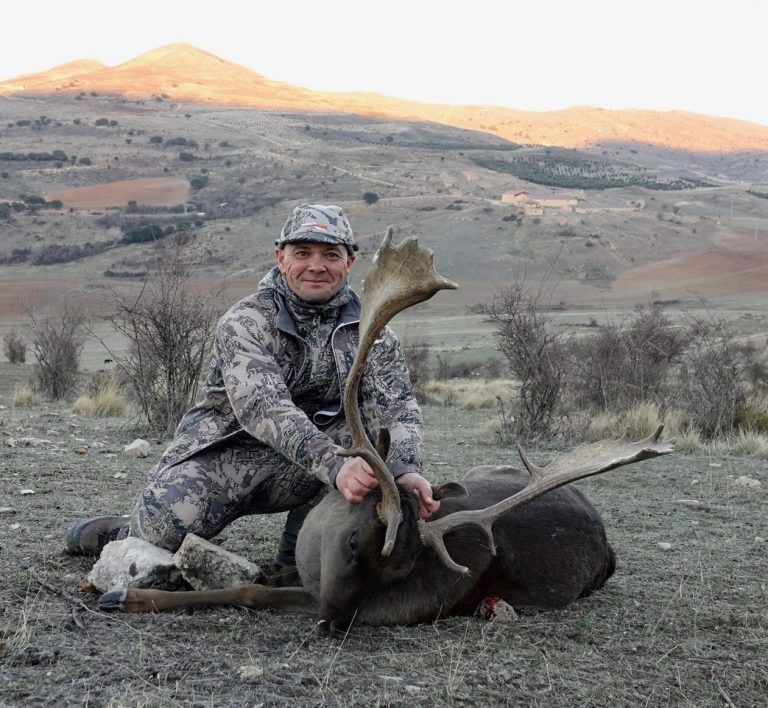
The Fallow Deer, Dama dama, is medium-sized, with more color variations than any other deer. The four principal ones are:
typical-summer coat of rich brown with white spots and lighter underparts, changing to dark gray-brown in winter with spots barely visible;
menil-pale fawn with white spots;
white (but not albino);
black-not actually black, but very dark brown.
There are many intermediate color variations. Social behavior varies: in some areas gregarious, with herds as large as 30, but in other areas more or less solitary. Herds usually led by does, although there does not seem to be a dominance hierarchy. Males establish small territories during the rut, when they bellow and grunt and do a good deal of fighting while gathering harems. Mating season is in October, with the (usually) single fawn born in the spring. Diurnal, with most activity early and late in the day. Essentially a grazer, but also browses shrubs and trees. Vision, hearing and sense of smell are good. When alarmed, gives a short “bark” and runs off with stiff-legged bounces that serve as a warning. Not as wary or shy as most other deer.
wild boar
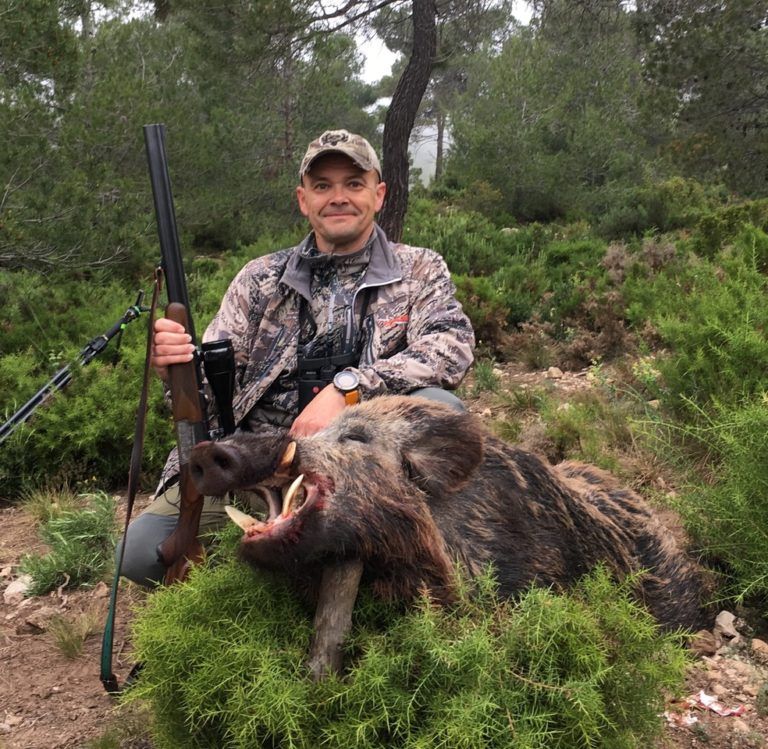
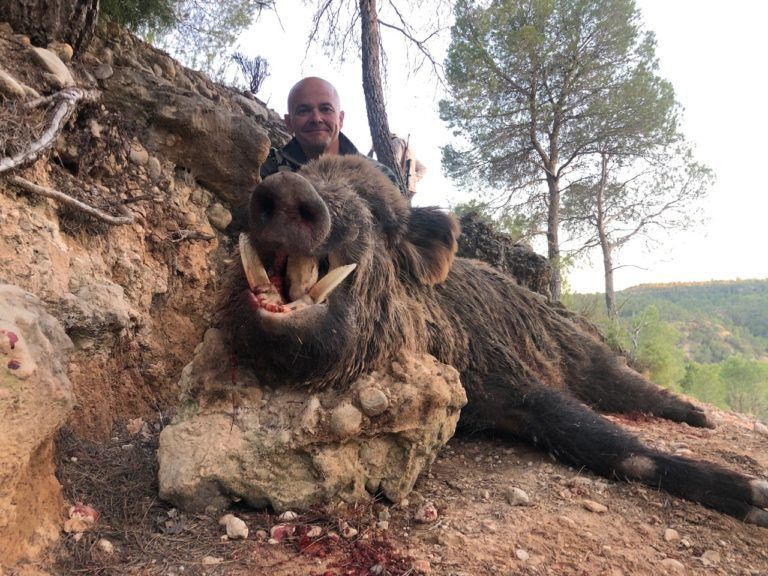
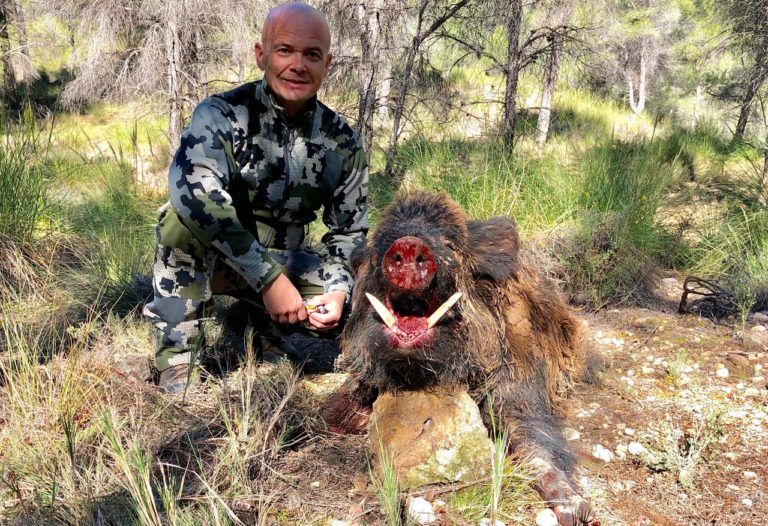
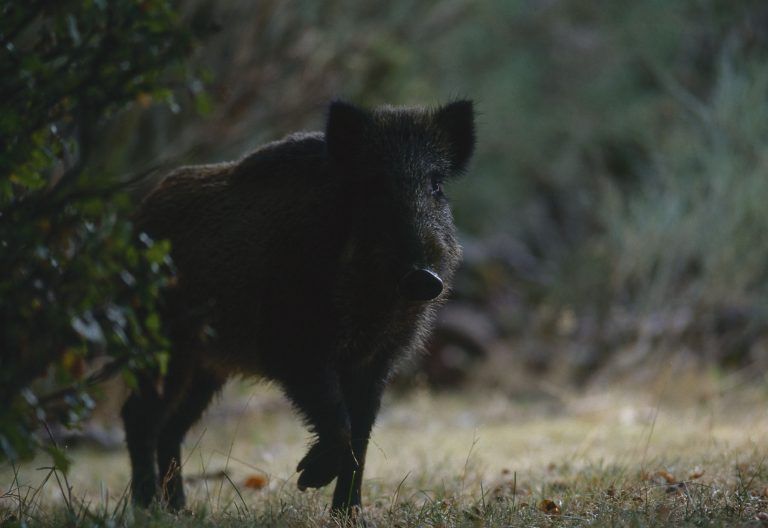
Probably is the most popular animal between the Spanish hunters. Spain have an extraordinaries destinations for big wild boars. You can to hunt them in stalking with guarantees but also the amazing experience of a driven hunt exclusively of wild boars for you and your friends. Great trophies for stalking or driven hunt.
goat
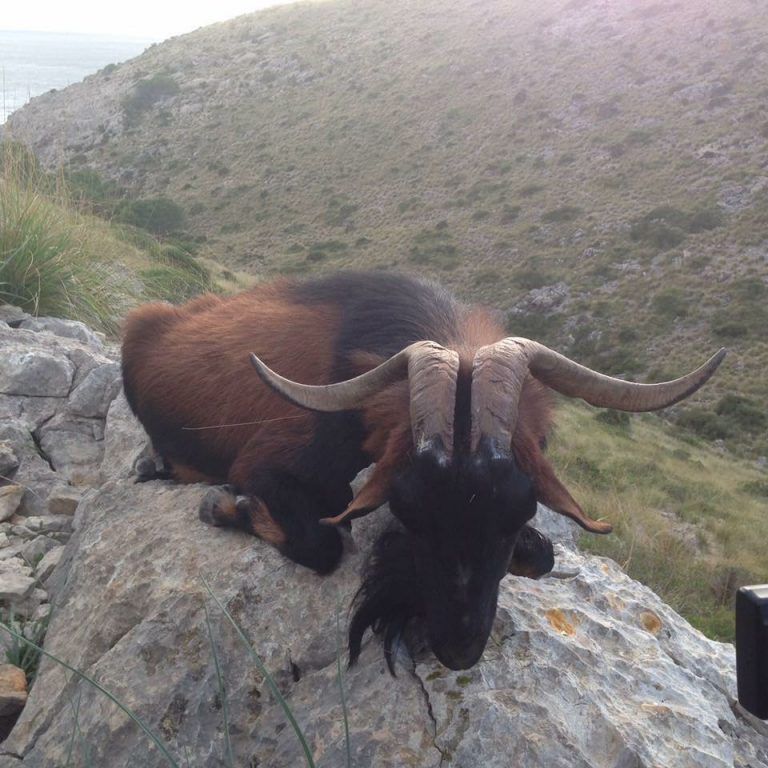
A special hunting trip for the most unique European hunting animal (Balearean Boc). We propose you hunt in a island in the middle of the Mediterranean sea. The Balearean Goat, Capra aegagrus Erxleben, is indigenous to the Balearean Island of Mallorca. This animal can be haunted all through the year, without season restrictions.
These animals are completely wild, the biggest threat to their existence being the cross-breeding with domestic livestock. Shoulder height of males is about 28 inches (71 cm), average weight is 100-110 pounds (45-50 kg). Females are smaller. The Balearean Goat browses on leaves, twigs and weeds and are therefore highly destructive feeders. Able to climb trees and feed in the branches. They are diurnal and all senses are good.
Included in the Capra Slam, the species is relatively new for the SCI-context. It was brought to Mallorca around 2000 b.c. by the Phoenicians, primarily as a source of food. Nowadays the species is carefully managed seeking a high level purity of the Balearean Goat, also known by its local name Boc Balear.
Distribution: Island of Mallorca, one of the Balearean Islands in the Mediterranean Sea
barbary sheep-audad sheep
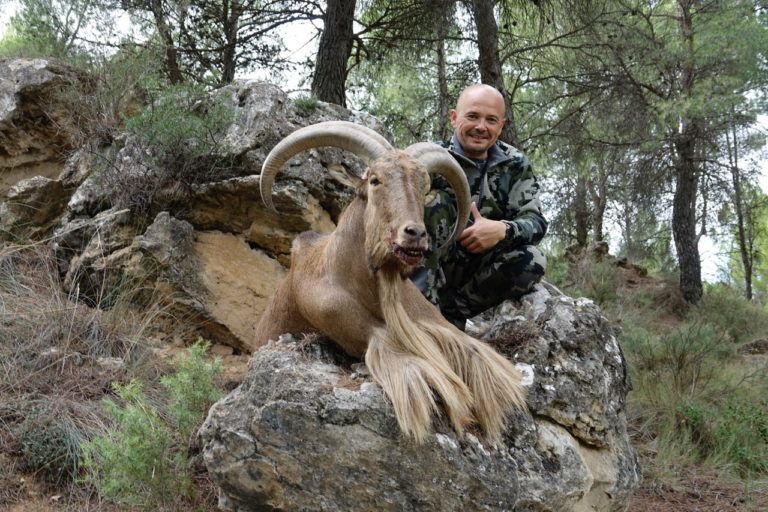
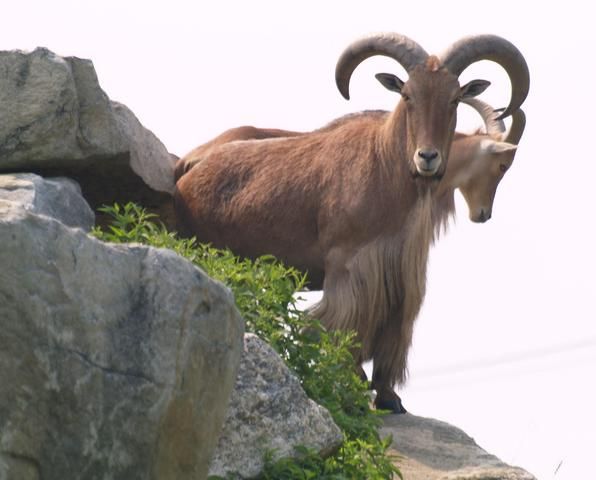
The Barbary Sheep (Ammotragus lervia) is a bovine animal of the Caprid family, native to the rocky areas of the Sahara and Western North Africa, of the monotypic genera Ammotragus.
The names arruí and aoudad, as it is known in many European languages, come from the Berber language.
The introduction of this species in 1970 was initially made in the Sierra Espuña National Park in the region of Murcia. The abundance of food, absence of predators and high birth rate caused the species to spread out in a very short time.
Characteristics
The Arrui (Ammotragus lervia) has very short hair, except for its tail and the shaggy “beard” which covers its throat and front legs. It has a reddish or sandy brown colour, slightly lighter on the underbelly.
Both males and females have horns. Those of the females are much smaller and slimmer. The horns of the males grow out in a triangular cross section, are very wide at the base, and grow backwards in a circular shape; the horn is perennial and continues growing throughout the entire life.
A mountain species, it manages perfectly on crags and cliffs located in a dry, semi-desert climate.
They live in more or less numerous groups made up of mixed herds, consisting of males of all ages, females and their young. The females are in charge of guiding the group.
These are animals which adapt perfectly to any type of terrain.
spanish wolf
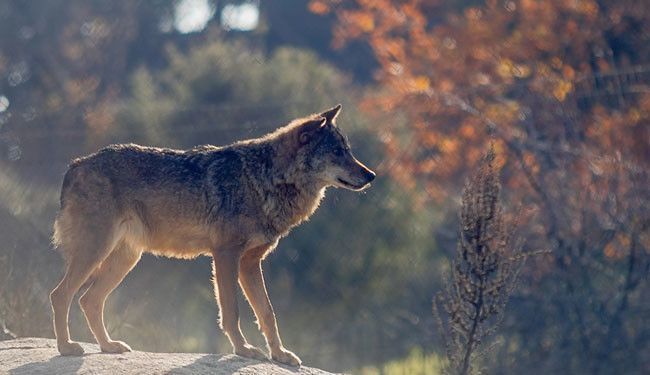
Canis lupus, the Spanish wolf is a gray wolf, the largest wild member of the dog family and is the ancestor of the domestic dog. The skull is especially large, with powerful jaws and large, well-developed, meat-eating teeth. Like most canids, it has 42 teeth. The fur is moderately long and thick. The overall color varies from grayish-brown to yellowish-brown, and there may be a reddish tinge on the head, ears, shoulders and legs.
Hunting the intelligent, wary wolf is difficult, and most are taken by chance encounter. European wolves have a reputation for being more aggressive toward humans than North American wolves.
The hunt of the Spanish wolf in Spain´s territory is a very exclusive hunt. The method is hunting over bait and the shooting distance is 100-150 yards. It can only be hunted north from Madrid and very few tags are available per year. Make sure to book ahead of time if you want to hunt the Spanish Wolf.
Hunting season: from November until February
Distribution: Northern part of Spain
Augusto Rodríguez Zafra | augusto@viphunters.es